

In warehouses, distribution centers, retail stockrooms, and fulfillment facilities, employees often need to do two things at once: access products on elevated shelves and transport them throughout the facility.
Traditionally, that means using a separate ladder and material handling cart. But when employees are constantly moving between the two, those extra steps can slow down everyday operations.
Ladder carts combine elevated access and material transport into one piece of equipment, helping employees pick, stock, and move inventory more efficiently.
So, when does a ladder cart make more sense than a traditional ladder? Let's take a closer look.
What Is a Ladder Cart?
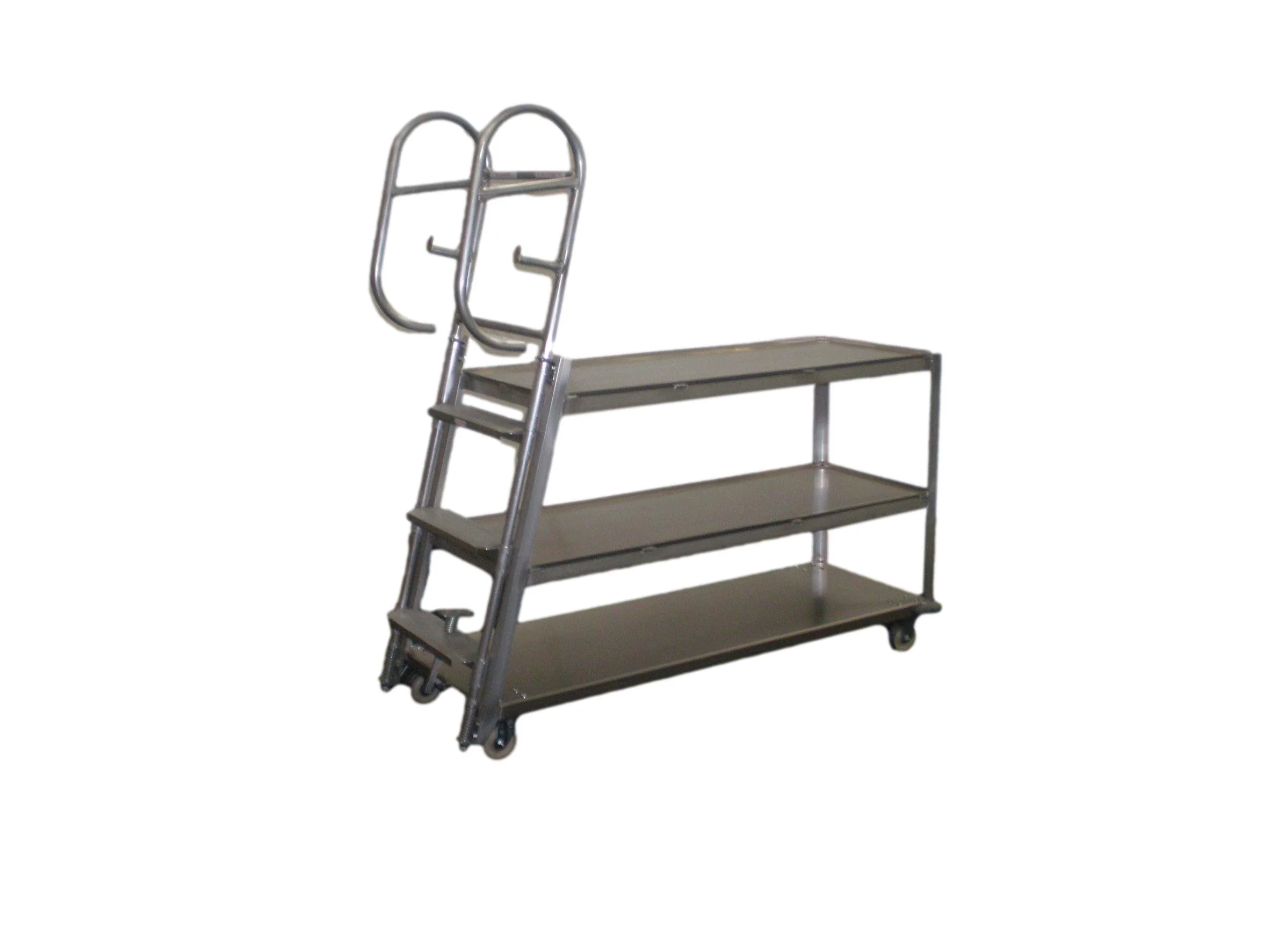
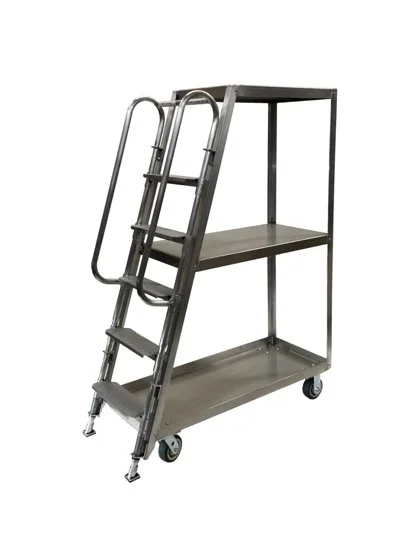
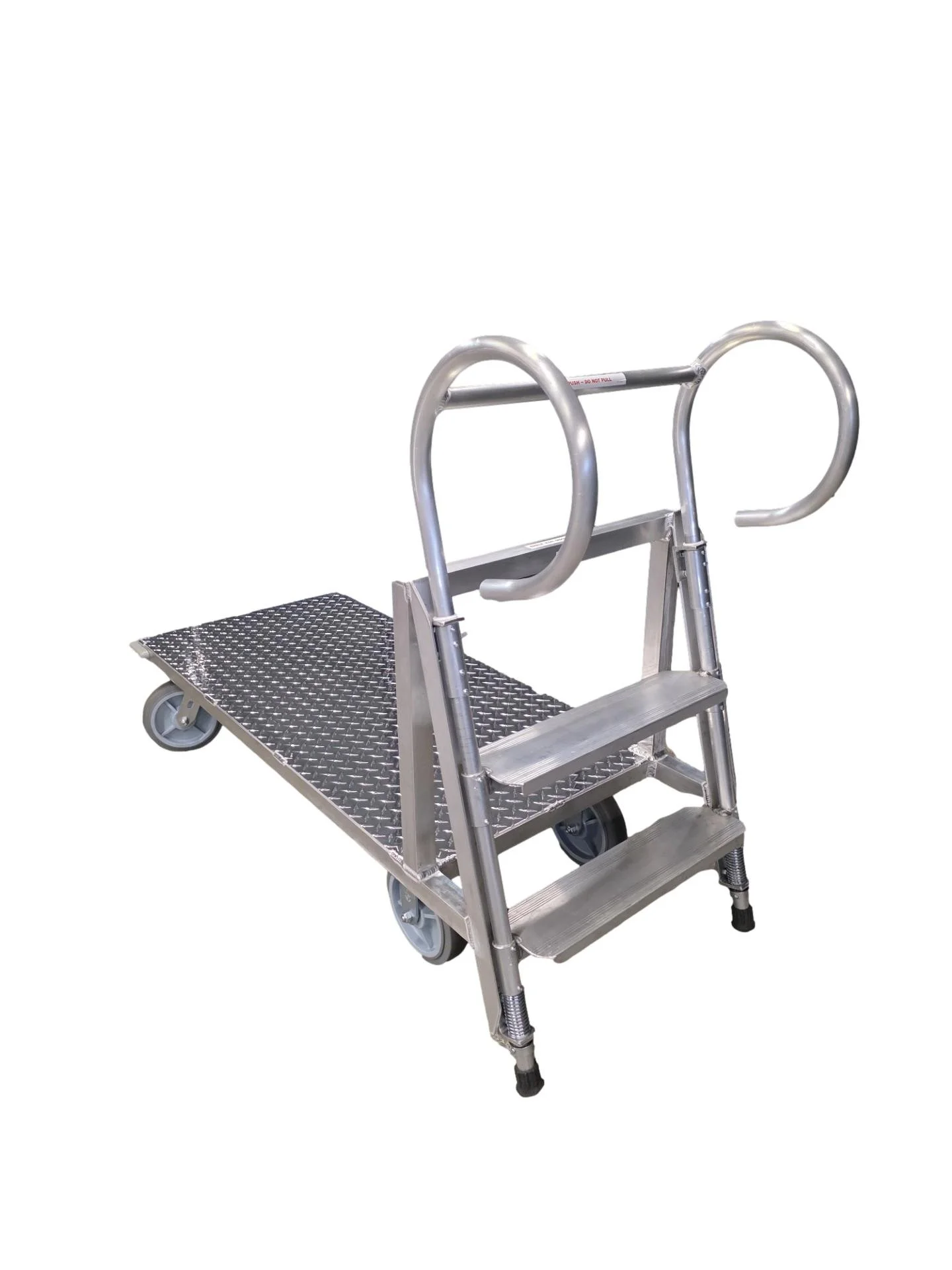
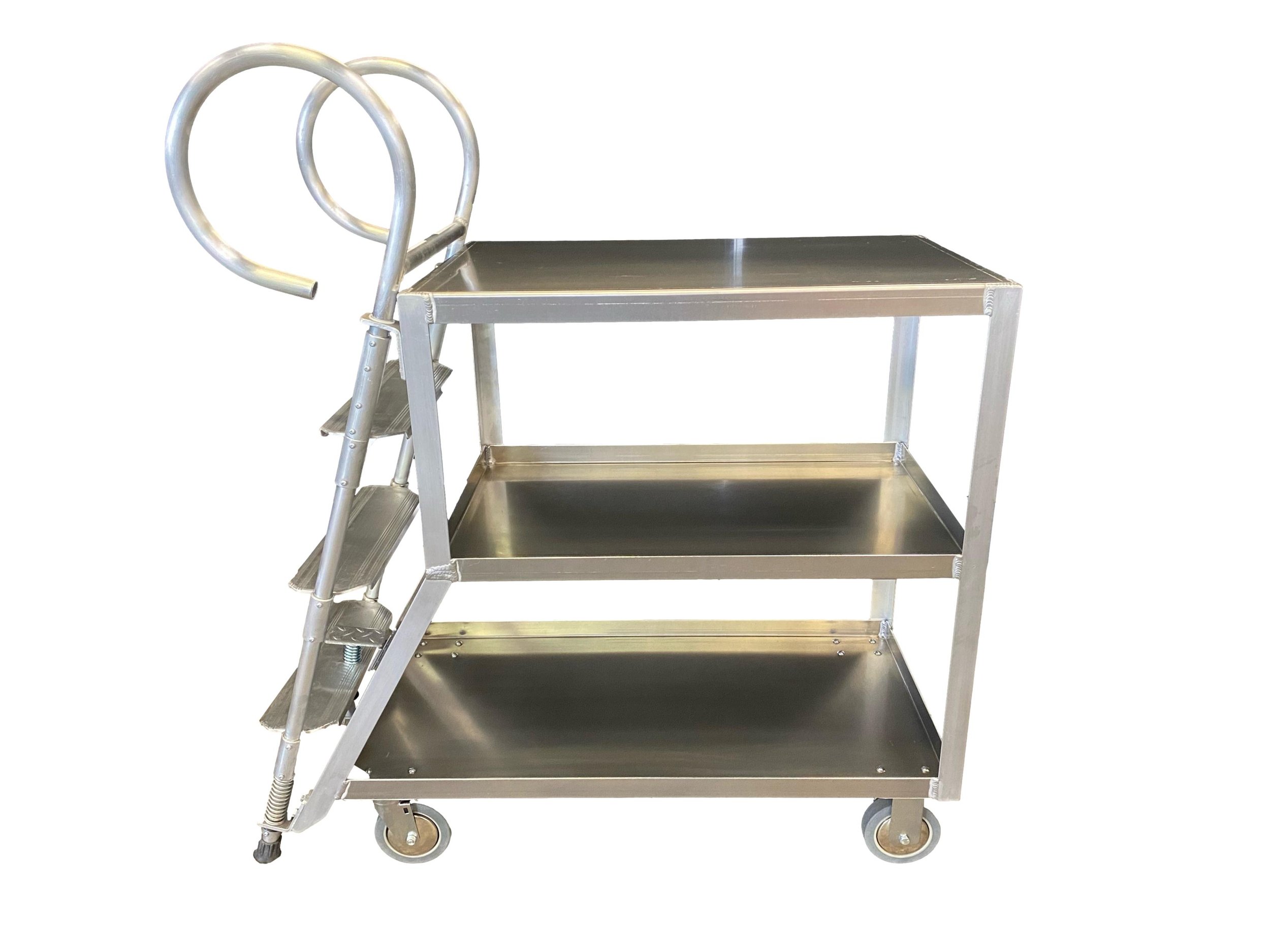
A ladder cart, sometimes called a stock picking cart with a ladder, is a mobile material handling cart with an integrated ladder or step system.
Unlike a traditional step ladder, which is primarily designed to provide elevated access, a ladder cart also includes shelves or platforms for transporting products, tools, and supplies.
This combination makes ladder carts particularly useful for tasks that require frequent movement between storage locations, such as order picking, inventory replenishment, and retail stocking.
1. Fewer Trips, More Efficient Picking
One of the biggest advantages of a ladder cart is that employees can access elevated inventory and transport products using the same equipment.
Consider an employee picking orders from multiple shelving locations. With a traditional ladder, they may need to move the ladder, retrieve products, and return to a separate cart to organize or transport those items.
A ladder cart simplifies that process by keeping the ladder and storage together.
For operations involving frequent picking or replenishment, eliminating those extra trips can make a meaningful difference in daily productivity.
2. Everything You Need in One Place
A traditional ladder provides access to higher shelves, but it doesn't necessarily help employees carry the equipment and supplies they need throughout the day.
Ladder carts can serve as mobile workstations, with shelving and accessories designed around the task.
Depending on the application, useful additions include:
Barcode scanner holders for order picking and inventory tracking
Clipboards or writing shelves for paperwork and pick lists
Toolboxes and storage compartments for frequently used equipment
Additional shelves or trays for transporting inventory
Cup holders and personal storage to keep everyday essentials organized
Rather than making separate trips to retrieve tools or supplies, employees can keep frequently used items organized and within reach.
3. Better Suited for Repetitive Stocking and Picking Tasks
Traditional ladders still have their place, particularly for occasional access to elevated areas.
However, when employees are repeatedly accessing shelves throughout a shift, the ability to combine a ladder with a picking cart becomes especially valuable.
Ladder carts are commonly used in:
Warehouses and distribution centers: Picking products from shelving and transporting orders
Retail stores and stockrooms: Restocking merchandise and accessing overhead inventory
Fulfillment operations: Picking, sorting, and moving products between locations
Manufacturing facilities: Accessing stored parts, tools, and components
The best solution depends on how frequently employees need elevated access and whether they're also transporting materials.
4. Stability and Safety Features Designed for the Application
Safety is an important consideration whenever employees work at elevated heights.
Depending on the design, ladder carts may incorporate features such as non-slip steps, stabilizing feet, counterweights, caster brakes, step-lock mechanisms, and handrails.
For example, some Rol-Away ladder carts feature step-lock systems that help keep the cart stationary while the ladder is being used. Other models incorporate counterweights or specialized ladder feet for additional stability.
The important distinction is that not all ladder carts are designed for the same working height, load, or application. The appropriate configuration should be selected based on the work being performed, the operating environment, and applicable safety requirements.
5. Customizable for Your Facility and Workflow
One of the biggest benefits of ladder carts is their flexibility.
A cart designed for narrow retail aisles may look very different from one intended for high warehouse racking or heavy-duty industrial applications.
At Rol-Away, ladder carts can be configured with different ladder heights, shelf arrangements, dimensions, caster options, and accessories.
For example, a compact three-step ladder cart may be ideal for everyday retail replenishment, while a larger stock picking cart with a higher ladder and additional shelving may be better suited for warehouse operations.
The goal is to choose equipment that fits the products being handled, the available space, and the way employees actually work.
When Is a Traditional Ladder the Better Choice?
A ladder cart isn't necessary for every application.
If employees only need occasional access to elevated shelving and aren't transporting products or equipment, a traditional ladder may be the simpler and more practical option.
However, if employees regularly move between picking locations, carry tools or inventory, or use both a ladder and a cart to complete the same task, an integrated ladder cart may offer a more efficient solution.
Choosing the Right Ladder Cart for Your Operation
Before selecting a ladder cart, consider a few important questions:
How high do employees need to reach?
What types of products will they be picking or transporting?
How much weight will the cart need to carry?
Are there narrow aisles, tight turns, or uneven floors?
Would additional shelving, scanner holders, or tool storage improve the workflow?
What stability features and safety requirements apply to the intended use?
Answering these questions helps determine whether a standard ladder cart will meet your needs or whether a custom configuration would be a better fit.
One Cart, Multiple Functions
The right material handling equipment should make everyday tasks easier, not add unnecessary steps.
For operations that involve frequent elevated picking, stocking, or replenishment, ladder carts offer a practical way to combine two essential functions into one piece of equipment.
From compact stock picking carts to larger, heavy-duty ladder carts, Rol-Away offers a variety of configurations designed for different industries and applications.
Looking to improve your picking or stocking process? Explore our ladder carts or contact the Rol-Away team to discuss a solution designed around your operation.