

The Most Common Warehouse Cart Mistakes (And How to Fix Them)
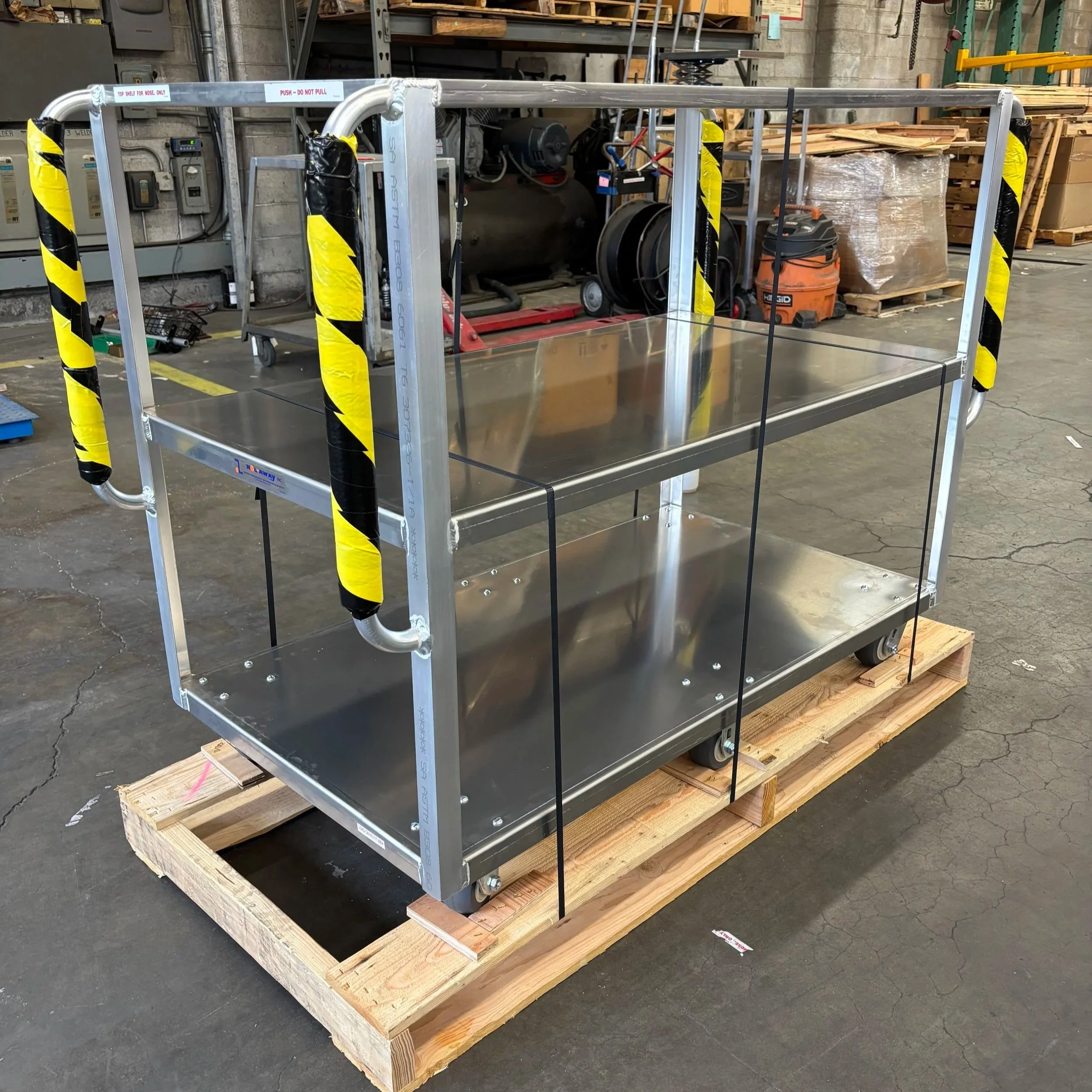
Walk through almost any warehouse or distribution center and you’ll notice it quickly: warehouse carts that are overloaded, hard to maneuver, or simply not designed for the job they’re doing.
Most of the time, these issues aren’t due to lack of effort. They come down to small mismatches between the cart and the workflow. Over time, those inefficiencies lead to slower operations, increased strain on employees, and unnecessary wear and tear on equipment.
Optimizing your carts, casters, and overall cart design can have a direct impact on productivity, safety, and efficiency.
Here are some of the most common warehouse cart mistakes we see, along with how to fix them.
1. Using one cart for everything
It’s tempting to standardize, but different warehouse, distribution, and fulfillment workflows require different solutions. Picking, packing, transporting bulky items, and handling small parts all have very different needs. A one-size-fits-all cart often leads to inefficiencies across the board.
Fix: Break down your workflows and identify where specialized carts would improve efficiency. In many cases, combining functions can streamline processes and make picking faster and more ergonomic.
2. Overloading beyond intended use
When carts are consistently overloaded, it’s usually a sign that the weight capacity doesn’t match the application. This leads to premature wear, safety concerns, and more difficult maneuverability.
Fix: Reevaluate load requirements and consider higher-capacity cart designs or better load distribution. Our standard carts typically start at 500 lbs of weight capacity, but that can be increased with higher-capacity casters and/or additional bracing depending on your operation. For ladder carts, our standard step capacity is 300 lbs, which can also be increased with additional bracing when needed.
3. Choosing the wrong wheels (casters) for the environment
Floor type matters more than most people realize. What works on smooth concrete won’t perform the same on rough surfaces, mezzanines, or outdoor environments.
Fix: Match caster type and material to your environment to improve mobility and reduce strain on employees. Our standard casters are typically 5” x 2” TRP, but we often recommend larger casters for mezzanines, durable freezer-safe options for sub-zero temperatures, and even pneumatic wheels for certain outdoor applications.
4. Shelf spacing that doesn’t match real use
We often see cart shelves that are either too close together or too far apart, forcing employees to stack items inefficiently or leaving valuable space unused. This is especially common when carts aren’t designed around the actual containers being used.
Fix: Design shelf spacing around real product dimensions, not assumptions. We can always build carts around your existing tote or carton sizes so everything fits cleanly and maximizes usable space.
5. Using the wrong braking system for the application
Braking systems are often overlooked, but they play a key role in both warehouse safety and overall operational efficiency. We frequently see teams working around carts with braking mechanisms that don’t quite fit the application, which can slow down workflows and create unnecessary effort.
Fix: Choose a cart braking system that aligns with how the cart is actually used. Different applications call for different solutions:
Caster brakes are a simple, effective way to lock a cart in place, but are best suited for applications where the cart does not need to be frequently locked and unlocked
Floor locks provide a more robust, hands-free option that can be engaged with a single step
Step locks are ideal for pickers using ladder carts who need to quickly and easily secure the cart while working on shelving
Ladder compression systems (standard on many of our ladder carts) automatically engage when weight is applied to the steps and release when not in use, making them ideal for high-movement environments
Handle brake systems are best suited for heavy-duty ladders where additional control and stability are needed
When the braking system matches the workflow, it removes friction from the process and makes day-to-day operations more seamless.
6. Ignoring how carts are actually used day-to-day
The biggest disconnect we see is between how a cart is intended to be used and how it’s actually used on the warehouse floor.
For example, carts designed for light picking end up being used for heavier loads, shelves get rearranged or bypassed entirely, or employees modify carts or workflows just to make them work. We also often see teams using carts without ladders while employees are forced to carry around separate step stools or ladders to reach product. This slows down the workflow and adds unnecessary movement. These workarounds are usually a sign that the cart isn’t aligned with the operation.
Fix: Observe real workflows in action. Pay attention to how employees are actually using the carts, not just how they were designed to be used. Small adjustments, whether it’s shelf placement, cart size, or added features like ladders or scanner holders, can make a significant impact on efficiency and reduce unnecessary strain.
When warehouse carts are aligned with the way your team actually works, everything runs more smoothly. Fewer workarounds, less physical strain, and a more efficient operation overall. Small changes in cart design, configuration, and caster and brake selection can make a measurable impact across your entire facility.
If you’re noticing any of these issues in your operation, we’re always happy to take a look and recommend solutions based on your specific workflow.